

In today's competitive landscape, a delicious menu and great service are only half the battle. Are potential diners finding you? They're discovering their next meal not by walking down the street, but by scrolling social media, searching on Google, and reading online reviews. The shift is clear: a strong online presence is no longer optional—it's essential for survival and growth. Thriving requires a modern playbook of effective digital marketing strategies for restaurants.
This guide moves beyond generic advice to provide actionable steps designed to turn online engagement into loyal, repeat customers. We'll explore how to leverage everything from hyper-local SEO and social media advertising to sophisticated email marketing and online reputation management. Implementing these strategies can be complex, and to help your restaurant transition from traditional foot traffic to digital dominance, you may consider enlisting professional digital marketing support.
By the end of this article, you will have a clear roadmap to enhance your digital footprint, attract new diners, and keep your tables full. Let's dive into the proven strategies that will define restaurant success.
1. Master Hyper-Local SEO with Google Business Profile Optimization
The first step in any modern restaurant's digital journey is conquering local search. When a potential customer searches "restaurants near me" or "Italian food in Miami," your Google Business Profile (GBP) is your most powerful asset. This isn't just a listing; it's a dynamic digital storefront that directly influences whether a diner chooses you or a competitor down the street.
Effective GBP management is one of the most crucial digital marketing strategies for restaurants, translating online visibility directly into foot traffic. It’s about actively curating your information, photos, reviews, and posts to dominate Google Maps and local search results. For instance, a local bistro in Boca Raton can use weekly Google Posts to feature their 'special of the week' with a mouth-watering photo, driving a significant increase in calls directly from their profile.
Actionable GBP Optimization Tips:
To ensure your profile stands out, implement these specific actions:
- Enrich Your Visuals: Upload new, high-resolution photos weekly. Before uploading, name the image files with relevant keywords like
best-sushi-downtown-miami.jpgto enhance their SEO value. - Manage Your Reputation: Respond to every review, positive or negative, within 24 hours. For critical feedback, offer a solution and provide an offline contact: "We are sorry to hear about your experience. Please email our manager at manager@yourrestaurant.com so we can make this right."
- Pre-emptively Answer Questions: Use the Q&A feature to address common inquiries. Post and answer questions like, "Do you have gluten-free options?" or "Is parking available?" to provide immediate value.
- Enable Direct Communication: Activate the messaging feature to allow customers to chat with you directly from your profile, but ensure you have the resources to respond promptly.
- Utilize Attributes: Add specific attributes like 'Outdoor seating,' 'Women-led,' or 'Curbside pickup' to appear in more filtered and specific user searches.
This foundational approach to search visibility is essential for any restaurant looking to thrive. To dive deeper into the principles of local search, you can learn more about search engine optimization on goadfuel.com.
2. Leverage Google Business Profile for Hyper-Local Dominance
The first step in any modern restaurant's digital journey is conquering local search. When a potential customer searches "restaurants near me" or "Italian food in Miami," your Google Business Profile (GBP) is your most powerful asset. This isn't just a listing; it's a dynamic digital storefront that directly influences whether a diner chooses you or a competitor down the street.
Effective GBP management is one of the most crucial digital marketing strategies for restaurants, translating online visibility directly into foot traffic. It’s about actively curating your information, photos, reviews, and posts to dominate Google Maps and local search results. For instance, a local bistro in Boca Raton can use weekly Google Posts to feature their 'special of the week' with a mouth-watering photo, driving a significant increase in calls directly from their profile.
Actionable GBP Optimization Tips:
To ensure your profile stands out, implement these specific actions:
- Enrich Your Visuals: Upload new, high-resolution photos weekly. Before uploading, name the image files with relevant keywords like
best-sushi-downtown-miami.jpgto enhance their SEO value. - Manage Your Reputation: Respond to every review, positive or negative, within 24 hours. For critical feedback, offer a solution and provide an offline contact: "We are sorry to hear about your experience. Please email our manager at manager@yourrestaurant.com so we can make this right."
- Pre-emptively Answer Questions: Use the Q&A feature to address common inquiries. Post and answer questions like, "Do you have gluten-free options?" or "Is parking available?" to provide immediate value.
- Enable Direct Communication: Activate the messaging feature to allow customers to chat with you directly from your profile, but ensure you have the resources to respond promptly.
- Utilize Attributes: Add specific attributes like 'Outdoor seating,' 'Women-led,' or 'Curbside pickup' to appear in more filtered and specific user searches.
This foundational approach to search visibility is essential for any restaurant looking to thrive. To dive deeper into the principles of local search, you can learn more about search engine optimization on goadfuel.com.
3. Launch Retention-Focused Email Marketing Campaigns
While search and social are excellent for attracting new customers, email marketing is your primary tool for building loyalty and driving repeat business. It provides a direct line of communication to your most valuable audience: diners who have already shown interest. This strategy allows you to bypass algorithms and speak directly to your customers with personalized offers, updates, and community-building content.
As one of the most cost-effective digital marketing strategies for restaurants, effective email marketing turns one-time visitors into loyal regulars. It’s about more than sending discounts; it’s about nurturing a relationship. For example, a local bistro can send a weekly newsletter featuring the chef’s latest creations and upcoming live music nights, making subscribers feel like insiders. A pizza shop could use an automated email to re-engage customers who haven't ordered in 60 days with a compelling "We Miss You!" offer.
Actionable Email Marketing Tips:
To build an engaged subscriber list and run campaigns that convert, implement these actions:
- Build Your List with Incentives: Offer a compelling reason for customers to subscribe on your website or at the point-of-sale. A free appetizer or 10% off their next meal is a powerful motivator.
- Optimize for Opens and Clicks: Send campaigns between Tuesday and Thursday, when engagement is typically highest. Keep subject lines short, compelling, and under 50 characters to ensure they are fully visible on mobile.
- Segment Your Audience: Don't send the same message to everyone. Segment your list by dining frequency, average spend, or past orders (e.g., vegetarian-only diners). This allows you to send highly relevant promotions that resonate.
- Show, Don't Just Tell: Every email should feature high-quality, mouth-watering photos of your food. Visual appeal is paramount and is often the single most persuasive element.
- Craft a Balanced Content Calendar: Mix promotional content with value-added content. Alternate between sending special offers and sharing stories about your team, new ingredient sources, or recipes for a popular cocktail.
This direct-to-consumer approach is essential for fostering long-term customer relationships. To learn more about building automated communication flows, you can explore how CRM automation works on goadfuel.com.
4. Build Trust with Proactive Online Review Management
In today's digital dining landscape, your online reputation is as crucial as the quality of your food. A proactive review management strategy involves more than just monitoring; it's about actively engaging with feedback on platforms like Google, Yelp, and Facebook to build trust and shape public perception. Your reviews are a public conversation, and how you participate speaks volumes.
Managing feedback is one of the most impactful digital marketing strategies for restaurants because it transforms customer opinions into a powerful asset. By responding systematically, you mitigate damage from negative experiences and amplify praise from happy diners. For example, a restaurant that receives a negative Yelp review about slow service can respond publicly with an apology and an offer to make it right, demonstrating accountability. Conversely, thanking a customer for a glowing Google review encourages others to try a specific dish, turning a comment into a compelling advertisement.
Actionable Review Management Tips:
To build a stellar reputation and leverage customer feedback for growth, implement these key actions:
- Respond with Speed and Personalization: Aim to answer every review within 24 hours. Address the reviewer by name and reference specific points from their comment to show you’ve read and value their input.
- Handle Negative Feedback Gracefully: For negative reviews, always start with an apology. Take responsibility without making excuses and offer a clear path to resolution offline: "We are truly sorry we missed the mark. Please contact our manager, Sarah, at manager@yourrestaurant.com so we can learn more."
- Amplify Positive Experiences: Thank positive reviewers enthusiastically. Reinforce the great points they made: "We're thrilled you enjoyed the spicy tuna roll! It's one of our chef's favorites. We can't wait to welcome you back."
- Encourage More Reviews: Train your staff to politely ask satisfied customers to share their experience online. A simple, "We're so glad you enjoyed your meal! If you have a moment, we'd love for you to leave us a review on Google," can significantly increase your volume of positive feedback.
- Mine Reviews for Operational Insights: Regularly analyze review content to spot recurring themes. If multiple reviews mention a dish is too salty or the music is too loud, you have actionable data to make tangible improvements.
5. Food Delivery App Marketing
In today's convenience-driven market, optimizing your presence on third-party delivery platforms like DoorDash, Uber Eats, and Grubhub is no longer optional. This strategy involves more than just listing your menu; it requires a dedicated approach to stand out in a crowded digital food court. A strong presence on these apps exposes your brand to a vast, active user base ready to place an order immediately.
Effective delivery app marketing is one of the most direct digital marketing strategies for restaurants to drive revenue. For instance, a ghost kitchen can operate multiple virtual restaurant brands from a single location, reaching diverse customer segments exclusively through these apps. Similarly, an established local restaurant can create delivery-exclusive menu items, using the platform to test new concepts and encourage orders from customers who might not visit in person.
Actionable Delivery App Optimization Tips:
To maximize your visibility and order volume, implement these specific actions:
- Invest in Professional Photography: Use high-quality, professional food photos with bright, appetizing lighting. Your lead image is the most critical asset for capturing attention.
- Write Compelling Menu Descriptions: Go beyond simply listing ingredients. Use descriptive language to highlight preparation methods and unique flavors. Instead of "Chicken Sandwich," use "Grilled Free-Range Chicken Sandwich with House-Made Aioli and Arugula on a Toasted Brioche Bun."
- Offer Platform-Exclusive Deals: Create special items, combos, or promotions available only on a specific app. This gives customers a compelling reason to choose your restaurant.
- Manage Your Reputation Diligently: Monitor and respond to all reviews left on the delivery apps. Promptly addressing negative feedback shows you value customer satisfaction.
- Optimize Your Menu for Travel: Prioritize items that maintain their quality and temperature during delivery. Consider deconstructing certain dishes or using specialized packaging to ensure a great at-home dining experience.
While third-party apps are powerful, integrating them with your own branded ordering system offers the best of both worlds. For more information, you can learn about building a free website and app for your restaurant.
6. Build Authority with Content Marketing and Food Blogging
Beyond paid ads and social media, establishing your restaurant as a culinary authority through content marketing creates a deep, lasting connection with your audience. This strategy involves creating valuable content like blog posts, recipes, and cooking videos that resonate with food enthusiasts. It shifts the focus from "buy our food" to "learn from our expertise," building trust and loyalty.
This approach is one of the most organic digital marketing strategies for restaurants because it improves SEO and positions your brand as a go-to resource. A chef-owned bistro could share the story behind a signature dish, including where they source their ingredients. A pizza restaurant could create a YouTube channel with tutorials on making the perfect dough, attracting a community of home cooks who will inevitably want to taste the professional version.
Actionable Content Marketing Tips:
To build a content engine that attracts and engages diners, implement these actions:
- Develop a Content Calendar: Plan your content around seasonal ingredients, holidays, local events, and food trends to ensure a consistent flow of relevant material.
- Optimize for Search: Each blog post should target keywords like "best brunch recipes" or "how to cook brisket" and include comprehensive meta descriptions to improve your search rankings.
- Embrace Behind-the-Scenes Stories: Create content that pulls back the curtain. Introduce your suppliers, spotlight your talented kitchen staff, or share the history of your restaurant.
- Incorporate Rich Media: Never post text alone. Embed high-quality photos and videos in every piece of content to make it more engaging and shareable.
- Encourage User-Generated Content (UGC): Run a contest asking customers to recreate one of your recipes at home and share their results on social media with a specific hashtag. Feature the best submissions on your channels.
This strategy establishes your brand's credibility and creates a valuable asset that works for you 24/7. To get inspired, you can explore our comprehensive marketing blog on goadfuel.com.
7. Influencer Marketing and Partnerships
Collaborative marketing is a powerful tool for building trust and reaching new, highly-engaged audiences. By partnering with local food bloggers, social media personalities, and community influencers, your restaurant can tap into established networks of potential customers. This strategy leverages an influencer's credibility to generate authentic endorsements that feel more like a trusted recommendation than a traditional ad.
This approach is one of the most effective digital marketing strategies for restaurants because it humanizes your brand and builds social proof. A new fine-dining establishment could host an exclusive tasting event for prominent local food influencers to generate buzz before its official opening. Likewise, a fast-casual spot can partner with lifestyle influencers for a seasonal menu launch, using their reach to drive immediate interest.
This bar chart from a recent industry report illustrates the typical cost per post, showing how accessible this strategy can be.
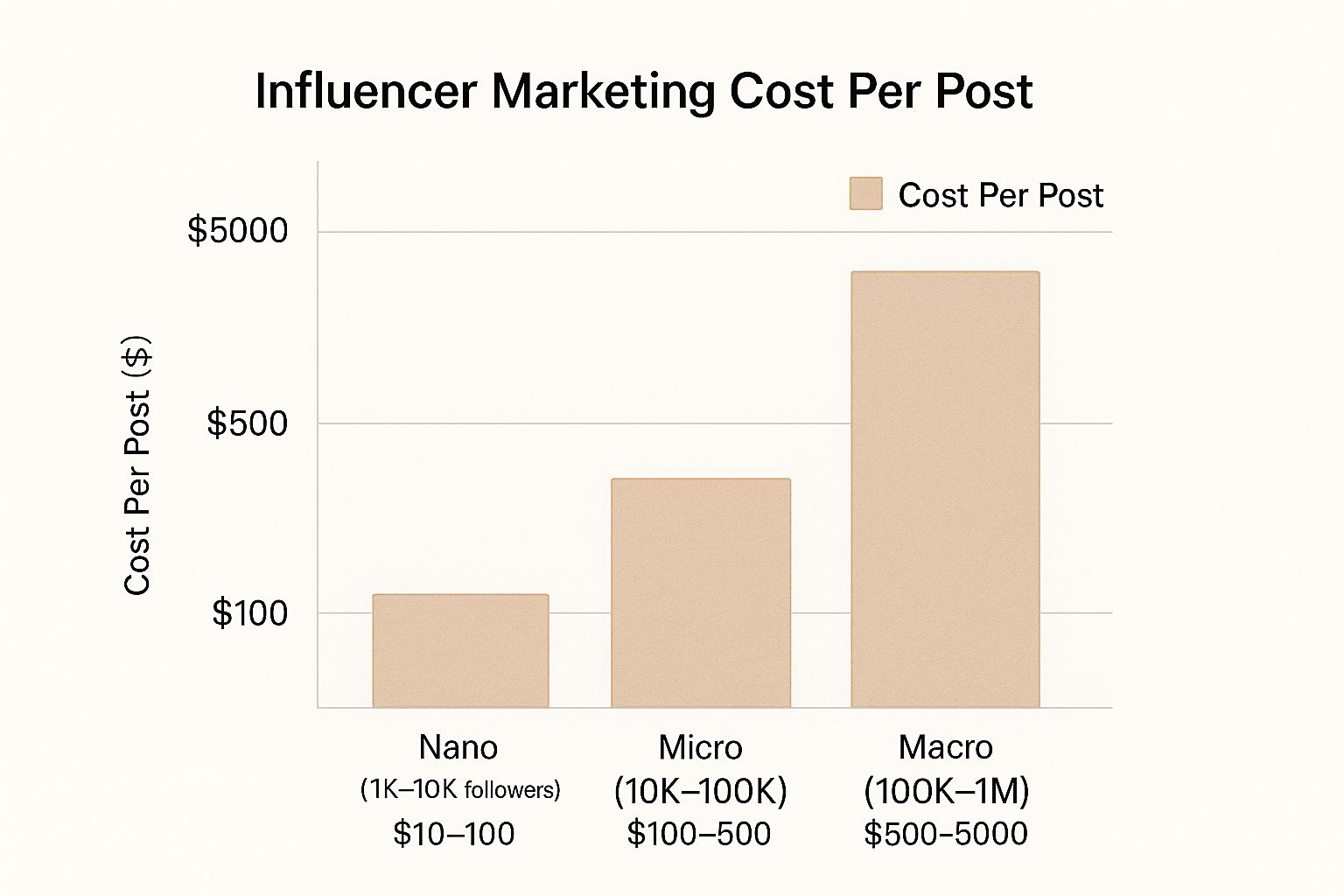
The data clearly shows that partnering with nano and micro-influencers offers a cost-effective entry point with the potential for high engagement rates.
Actionable Influencer Partnership Tips:
To build a successful collaboration, follow these targeted actions:
- Focus on Micro-Influencers: Prioritize influencers with 1,000 to 100,000 followers. Their audiences are often more niche and loyal, resulting in higher engagement and a better ROI.
- Align Your Audiences: Scrutinize an influencer's follower demographics to ensure their audience aligns with your target customer profile.
- Provide Creative Freedom: Set clear brand guidelines and campaign goals, but allow influencers the creative freedom to produce content that feels authentic to their personal brand.
- Track Performance Accurately: Measure the campaign's impact by providing each influencer with a unique promo code or a dedicated, trackable link.
- Build Long-Term Relationships: Instead of one-off posts, cultivate lasting partnerships. This fosters genuine brand advocacy and provides more consistent value. For broader campaigns, you can find curated media contacts with Public Relation Lists for PR Packages to expand your reach.
8. Loyalty Programs and Customer Retention Apps
Acquiring a new customer can cost five times more than retaining an existing one, according to research from HubSpot. This makes customer retention an economic necessity. Digital loyalty programs and mobile apps are the modern answer to the classic punch card, transforming one-time visitors into a reliable base of repeat business.
These platforms are among the most effective digital marketing strategies for restaurants because they directly incentivize frequent visits. They also open a powerful channel for direct communication and data collection. For example, a local coffee shop can use a digital punch card app to offer a free drink after ten purchases, and also send a push notification about a new seasonal latte, driving an immediate sales lift.
Actionable Loyalty Program Tips:
To launch a program that builds a loyal following, implement these strategies:
- Offer an Instant Reward: Make the signup process incredibly simple and provide an immediate incentive, like a free appetizer or 15% off the current bill, to encourage adoption.
- Set Attainable Goals: Design your reward thresholds to be achievable. Tiered rewards, where smaller perks are earned along the way, keep engagement high.
- Personalize the Experience: Use the data you collect, such as order history, to send personalized offers. A customer who always orders a specific wine could receive a "half-off bottles" promotion.
- Leverage Push Notifications Wisely: Use push notifications for high-value alerts, not daily spam. Remind users about expiring rewards or "members-only" events.
- Analyze Program Performance: Regularly review your program's data. Are customers redeeming rewards? Which offers are most popular? Use these insights to refine your strategy for maximum impact.
Digital Marketing Strategies Comparison for Restaurants
| Strategy | Implementation Complexity 🔄 | Resource Requirements ⚡ | Expected Outcomes 📊 | Ideal Use Cases 💡 | Key Advantages ⭐ |
|---|---|---|---|---|---|
| Social Media Marketing for Restaurants | Medium to High: ongoing content creation and platform management | Moderate: skilled content creators and social media managers | Increased brand awareness, engagement, foot traffic | All restaurants targeting Millennials and Gen Z | Cost-effective reach, precise targeting, strong engagement |
| Google My Business Optimization | Low to Medium: initial setup plus regular updates | Low: mainly time for profile management | Improved local search rankings, increased direct customer contacts | Local and independent restaurants | Free tool, impacts local SEO, provides valuable insights |
| Email Marketing Campaigns | Medium: building and segmenting email lists, consistent content | Moderate: email marketing software and creative resources | High ROI, improved customer retention, repeat business | Restaurants focused on loyalty and repeat customers | Direct communication, measurable results, personalized offers |
| Online Review Management | Medium: continuous monitoring, responding to reviews | Low to Moderate: staff time for engagement | Enhanced reputation, improved trust, better local SEO | All restaurants, crucial for fine dining and competitive markets | Builds credibility, free marketing through reviews |
| Food Delivery App Marketing | Medium: menu optimization, regular updates to platforms | Moderate: photography, promotions, and POS integration | Increased order volume and visibility on delivery platforms | Restaurants with delivery-friendly menus and expansion plans | Access to large customer bases, built-in logistics |
| Content Marketing and Food Blogging | High: requires consistent, high-quality content creation | High: writing, photography, video production | Improved SEO, brand authority, long-term audience growth | Restaurants with unique recipes or strong culinary stories | Evergreen content, establishes thought leadership |
| Influencer Marketing and Partnerships | Medium to High: influencer vetting and campaign management | Moderate to High: campaign costs, influencer fees | Expanded reach, authentic promotions, brand trust | Restaurants targeting younger demographics in competitive markets | Access to engaged audiences, authentic content |
| Loyalty Programs and Customer Retention Apps | High: app development and maintenance, customer onboarding | High: tech development and marketing resources | Increased customer retention and frequent visits | Coffee shops, fast-casual, neighborhood establishments | Personalized offers, valuable customer data, competitive edge |
Putting It All Together: Your Recipe for Digital Success
Thriving in today's culinary landscape requires more than a great menu. It demands a sophisticated, multi-channel approach to digital marketing that consistently attracts new diners and fosters lasting loyalty. We have explored a comprehensive menu of digital marketing strategies for restaurants, each serving a unique purpose in building your brand's online presence and driving real-world traffic.
From the foundational necessity of an optimized Google Business Profile to the community-building power of engaging social media, each tactic is a vital ingredient in your recipe for success. The goal is not to execute every strategy overnight, but to understand how they interconnect to create a powerful, cohesive marketing ecosystem.
Your Actionable Path Forward
The path to digital dominance begins with a single, strategic step. Instead of feeling overwhelmed, focus on a phased implementation:
- Start with Your Foundation: First, ensure your Google Business Profile is flawless and your online reviews are actively managed. This is the bedrock of local discovery.
- Build Your Audience: Next, focus on building a direct line of communication. Implement a simple email capture on your website or at the point of sale and begin sharing valuable content.
- Amplify Your Reach: Once your foundation is solid, strategically layer on paid advertising, influencer collaborations, and content marketing to reach new audiences and scale your growth.
The most successful restaurants view digital marketing not as an expense, but as a critical investment. By embracing these digital marketing strategies for restaurants, you move beyond simply serving food; you start building a community, crafting a narrative, and creating a resilient business that can flourish in any market.
Want to simplify your ad campaigns and drive more reservations? Discover our fully managed Meta and Google Ads solutions. Book a free demo with us at https://goadfuel.com/book-demo or send us an email at hello@goadfuel.com for more information.


