

A solid restaurant digital marketing strategy is more than just posting on social media when you remember. It's a comprehensive system that integrates a strong local online presence, engaging social media, smart advertising, and loyalty programs to bring people in the door and keep them coming back. This isn't about random acts of marketing; it's about building a predictable machine that drives reservations, orders, and foot traffic in a measurable way.
Why Modern Restaurants Must Win Online First
In the hyper-competitive restaurant industry, your online visibility is as critical as the quality of your food. The modern diner's journey to your tables almost always starts with a screen. They’re searching Google for "best brunch near me," scrolling through Instagram for mouth-watering dishes, or checking Yelp reviews before ever making a reservation.
Many restaurant owners leave money on the table by clinging to outdated tactics or maintaining a sporadic social media presence. This isn't building a system; it's just making noise. An effective restaurant digital marketing strategy is a full-funnel plan designed to capture attention and drive real-world results.
The Diner Has Gone Digital
The data tells a clear story: digital marketing is the number one tech investment for restaurants globally. In a survey of 550 operators, a staggering 46% plan to allocate their main tech budgets to digital marketing tools—more than they are spending on traditional hardware like POS systems.
This isn't a trend; it's a direct response to how people choose where to eat. Diners expect a seamless digital experience that matches the quality of your in-person service. A winning strategy connects all these digital touchpoints into a powerful engine for growth.
A great marketing plan ensures your restaurant isn't just discovered but becomes the top choice. It's about being present and persuasive at every stage of the customer's decision.
Core Pillars of a Modern Restaurant Marketing Strategy
Building an effective digital presence isn't about doing one thing well; it's about making several key components work together seamlessly. For a broader look at these fundamentals, this a comprehensive guide to digital marketing for startups offers valuable context.
Let's break down the essential components of a modern strategy. The table below outlines the core pillars, their objectives, and the key channels or tools you'll use to execute them.
| Pillar | Objective | Key Channels/Tools |
|---|---|---|
| Strong Local Foundation | Ensure local customers can find you easily and accurately. | Google Business Profile, Yelp, TripAdvisor, Apple Maps |
| Engaging Social Proof | Build a community and tell your brand's story visually. | Instagram, TikTok, Facebook, User-Generated Content (UGC) |
| Targeted Customer Acquisition | Drive immediate reservations and orders from specific audiences. | Meta Ads (Facebook/Instagram), Google Ads, Influencer Outreach |
| Loyalty & Retention | Nurture relationships with existing customers for repeat business. | Email Marketing (e.g., Mailchimp), SMS Programs (e.g., Attentive) |
Each of these pillars supports the others. A strong local foundation makes your paid ads more effective, great social proof gives you content for your email campaigns, and a solid retention plan maximizes the value of every new customer you acquire. It's a flywheel for growth.
Mastering Your Local Digital Footprint
Before spending a dollar on paid ads, you must get your house in order. Think of your local digital footprint as the foundation of your entire restaurant digital marketing strategy. It ensures that hungry customers searching nearby can find you and trust what they see.
This isn't about just existing online; it's about dominating your local search results. Too many restaurant owners treat their online listings as a "set it and forget it" task—a huge mistake. A strong local presence is an active, ongoing effort that directly puts customers in seats and is arguably the most cost-effective, long-term marketing you can do.
Go Beyond the Basics with Google Business Profile
Your Google Business Profile (GBP) is, without a doubt, your most important digital asset. It’s often the first impression a potential customer gets, appearing directly in Google Search and Maps. Simply filling out your address and phone number is nowhere near enough.
To stand out from the competition, you must treat your GBP as a dynamic, living marketing channel.
- Stunning Photography: Ditch the blurry phone snaps. Invest in professional, high-quality photos. Showcase your best-selling dishes, but also capture your restaurant's ambiance, your smiling team, and the overall experience.
- Complete Menu Uploads: Don't just link to your website menu. Upload the entire thing directly to your profile, complete with prices and mouth-watering descriptions. This allows a potential diner to decide on you without ever leaving Google.
- Proactive Q&A Section: Don't wait for customers to ask the obvious. Pre-populate the Q&A section with answers to common questions like, "Do you have gluten-free options?" or "Is parking available?" This shows you’re attentive and provides instant value.
A fully optimized Google Business Profile does more than just provide information—it sells the experience. It tells a potential diner that you are professional, attentive, and proud of what you offer before they step through the door.
The Power of Consistent Local Citations
Beyond Google, your restaurant's information is scattered across dozens of other online directories, apps, and review sites—think Yelp, TripAdvisor, and even Apple Maps. These are called local citations, and consistency here is non-negotiable.
Your Name, Address, and Phone number (NAP) must be identical everywhere. Even a tiny mistake, like using "St." on one site and "Street" on another, can confuse search engines and hurt your local rankings. This consistency is a powerful signal to Google that your business is legitimate and trustworthy.
Imagine a taco shop in a competitive area like San Diego. When a large convention is in town, thousands of visitors search for "tacos near me." The shops with consistent, optimized profiles will appear first and capture that lucrative foot traffic. Those with messy citations get buried. It’s a simple but critical part of a winning restaurant digital marketing strategy.
Turn Reviews into a Marketing Asset
Online reviews are a direct reflection of your reputation and a massive ranking factor. You need a proactive review management strategy that goes beyond damage control. You must actively encourage your happy customers to share their great experiences.
- Encourage Reviews: Make it easy. A small sign at the register or a simple QR code on the receipt that links directly to your Google review page can work wonders.
- Respond to Everything: Thank every person who leaves a positive review. For negative ones, respond professionally and quickly. A thoughtful reply can turn a bad experience around and shows everyone else that you genuinely care.
By mastering these foundational elements, you create a powerful magnetic pull for local customers. For restaurant owners who want to go deeper, the next step is understanding the principles of local search engine optimization (SEO). Achieving local dominance ensures that when you finally run paid ads, you're sending traffic to a digital storefront built to convert.
Crafting a Social Media Presence That Drives Foot Traffic
Having a strong local foundation gets you found, but a killer social media presence makes you wanted. For restaurants, social media is far more than a digital photo album; it's the stage where you tell your story, build a genuine community, and turn casual scrollers into tonight's customers.
Think of your social media as an extension of your hospitality. It’s where you showcase your restaurant's personality, chat directly with guests, and give them a compelling reason to choose you. A well-executed social plan isn't just a "nice-to-have"—it's a core pillar of any effective restaurant digital marketing strategy.
Beyond Food Photos: A Content Plan That Actually Connects
Posting beautiful food shots is the price of entry. To build a feed that people genuinely follow, you need variety and a reason for them to come back. This is where content pillars—the main themes you'll return to—come into play. A solid content mix prevents your feed from getting stale and builds a deeper connection with your audience.
For example, a modern Italian bistro could build its social presence around a few key pillars:
- Menu Storytelling: Don't just post the dish. Use an Instagram carousel to break down the history of a classic recipe, showcase the local farm where you source your tomatoes, or explain the perfect wine pairing.
- Behind-the-Scenes Access: People love feeling like they have an inside scoop. Film a high-energy TikTok of your chefs hand-making pasta, your bartenders mixing a signature cocktail, or the controlled chaos of morning prep. It’s real, it’s raw, and it builds trust.
- Meet the Team: Your staff is the heart of your restaurant. Run a feature on your head chef, a long-time host, or your rockstar bartender. Putting a face to the name makes your brand feel human and relatable.
- Customer Features (UGC): Actively encourage diners to tag you in their posts. When they do, reshare the best ones! There is no better advertising than a happy customer. This user-generated content (UGC) is powerful social proof that builds immense trust.
Remember, the goal isn't just to sell food; it's to sell an experience. You’re selling a memory, a vibe, and a sense of belonging. Your social feed should be a direct reflection of that feeling.
Platform-Specific Tactics For Maximum Impact
Not all social platforms are created equal. Smart marketers tailor their content to fit the unique audience and format of each channel.
Instagram: This is your visual flagship. It demands high-quality photos, multi-slide carousels for storytelling, and Reels that show off your restaurant's unique atmosphere. Use Instagram Stories for daily specials, fun polls, and Q&As with the chef.
TikTok: This platform is all about authenticity, high energy, and jumping on trends. Create short, snappy videos that are fun and don't feel like a corporate ad. Think quick-cut recipe tutorials, staff trying a viral challenge, or oddly satisfying "ASMR" clips of sizzling food.
Facebook: Treat your Facebook page as a community hub. It's perfect for posting detailed event information, sharing longer videos like chef interviews, and running highly targeted ads to bring in local customers.
The influence social media has on dining choices is massive. There are about 5.42 billion active social media users, and research shows that 72% use these platforms to check out restaurants. More importantly, 68% will specifically look at a restaurant's social media before deciding to visit.
Turning Engagement Into Foot Traffic
Likes and comments are great, but reservations and orders are what keep the lights on. The final step is turning online buzz into real-world action. To truly convert interest into visits, you need to dive into essential social media engagement strategies that build a loyal community.
Your social profiles are also front-line customer service channels. When someone asks a question in your comments or DMs, they expect a quick, helpful response. Treating these digital interactions with the same care as a guest in your restaurant builds the trust needed to drive consistent foot traffic.
Driving Immediate Results with Targeted Paid Ads
Organic growth is a marathon, but paid ads are the sprint. While building your local SEO and social media presence creates a foundation for long-term growth, sometimes you need to get people in the door right now. A slow Tuesday night? A new lunch special to promote? This is where targeted paid advertising becomes your most valuable asset.
With paid campaigns on platforms like Meta (Facebook and Instagram) and Google, you get to skip the line. Instead of waiting for your content to gain traction, you place your restaurant directly in front of people actively looking for a place to eat. It's a direct, measurable way to turn ad spend into revenue.
This process, from a simple idea to a live ad campaign, is what we do every day. Here’s a look at how it breaks down:
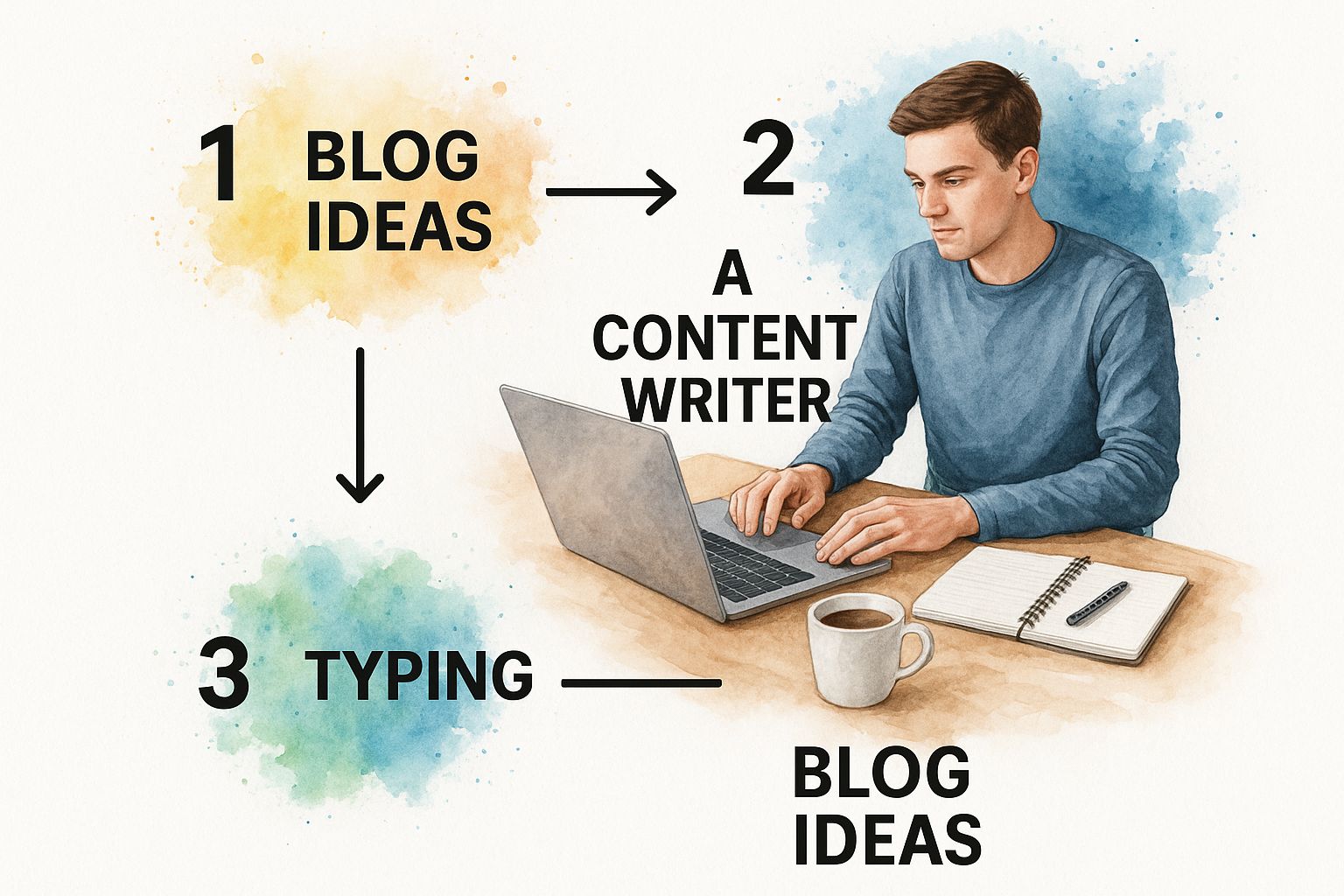
As you can see, a straightforward concept like promoting a new special evolves through strategic planning, audience targeting, and smart execution to become an ad that drives results.
Pinpoint Your Perfect Customer with Hyper-Targeting
The magic of paid advertising isn't just about reaching more people; it's about reaching the right people. Both Google and Meta offer powerful targeting options that let you focus your budget on the diners most likely to convert.
For example, a high-end steakhouse in Boca Raton could run a Facebook campaign targeting users who:
- Live within a 5-mile radius of the restaurant.
- Have an upcoming anniversary in the next 30 days.
- Have shown an interest in "fine dining," "craft cocktails," or "wine."
This level of detail is a game-changer. It means your ad for a "romantic anniversary dinner" isn't wasted on college students looking for cheap pizza. You're putting the perfect message in front of the perfect person at the perfect time.
A well-targeted ad feels less like an interruption and more like a helpful suggestion. The goal is to be so relevant that your audience is genuinely glad they saw your promotion.
Crafting Ads That Turn Browsers into Diners
Once you’ve defined your audience, your ad creative needs to do the heavy lifting. It must be compelling enough to stop someone mid-scroll and inspire them to take the next step.
Google Search Ads for High-Intent Customers
When someone types "best brunch near me" into Google, they're ready to make a decision. Your goal is to be their first and best option. A powerful Google Ad for this search would include:
- A Headline That Matches the Search: "Best Brunch in [Your City]"
- A Compelling Offer: "Bottomless Mimosas Until 2 PM"
- A Clear Call-to-Action (CTA): "Book Your Table Now"
These ads are effective because they capture customers at the exact moment of decision, driving immediate reservations.
Meta Ads (Facebook & Instagram) for Discovery
On social media, you're catching people in a more relaxed, passive state. This is where you create demand. Your visuals have to be stunning. For instance, a local pizzeria could run an Instagram Story ad featuring a dramatic, slow-motion "cheese pull" video.
By targeting users who have recently engaged with food content, you can grab their attention with a simple "Order Now" button that links straight to your online ordering system.
Smart Budgeting for a Positive ROAS
You don’t need a massive budget to get started with paid ads. In fact, we advise starting small to test what works. This is a crucial piece of any sustainable restaurant digital marketing strategy.
- Start Small and Test: Kick things off with a modest daily budget, say $10-$20 per campaign. Use this to test different ad visuals, headlines, audiences, and offers.
- Analyze the Data: After about a week, dive into your ad manager. Which ad brought in the cheapest reservations? Which audience clicked the most? The numbers will tell the story.
- Scale What Works: This is the best part. Turn off the ads that aren't performing and push your budget toward the winners—the campaigns that are delivering a positive return on ad spend (ROAS).
This cycle of testing, analyzing, and optimizing separates successful campaigns from wasted money. To see how we build and manage these campaigns day-in and day-out, check out our approach to marketing with Adfuel.
Building a Loyalty Program Your Customers Will Love
Acquiring new customers is exciting, but retaining them is where real, sustainable profit lies. A loyal customer spends more, visits more often, and becomes a walking advertisement for your restaurant.
This is why a smart loyalty program is a core piece of any serious restaurant digital marketing strategy. It's about moving beyond flimsy punch cards to use email and SMS for building direct, personal relationships. The goal is to make every message feel like a valued conversation, not a promotional blast.
Ethically Building Your Customer Database
Before you can build loyalty, you need a line of communication. The most successful restaurants are experts at ethically collecting customer contact information at natural touchpoints.
Consider these seamless opportunities:
- Reservation Systems: When a guest books online, add an optional checkbox to join your email list for exclusive offers. It's a simple, low-friction ask.
- Free Wi-Fi Logins: Offering free Wi-Fi is a given. Asking for an email address for access is a fair, high-value exchange.
- In-Store QR Codes: Place QR codes on tables or receipts that link to a sign-up page for your "VIP club." Promise a small, immediate reward, like a free appetizer on their next visit, to sweeten the deal.
This is about offering clear value in exchange for permission to stay in touch. For more ideas, check out our guide on how to elevate restaurant and bars marketing with Adfuel.
Personalization Through Smart Segmentation
Once you have a list, blasting everyone with the same generic "20% off" email is a ticket to the spam folder. The real power lies in segmentation—dividing your audience into smaller groups based on their behavior to send highly relevant messages.
A great loyalty program makes each customer feel uniquely seen and appreciated. It’s the digital equivalent of a host remembering a regular's favorite table.
For example, a modern Italian eatery could set up automated campaigns for specific segments:
- The "We Miss You" Campaign: If a regular hasn't visited in 60 days, an automated email can go out with a friendly, "We've missed you!" and a special offer to entice them back.
- The Birthday Reward: A classic for a reason. Collect birth dates at sign-up and send an automated email or SMS offering a free dessert or drink during their birthday month. It builds incredible goodwill.
- The High-Spender Offer: Create a segment for customers who have spent over a certain amount in the last six months. Send them exclusive access to a new menu tasting or a special "thank you" discount.
These personalized touches show you’re paying attention and value their business beyond a single transaction.
Choosing Your Loyalty Model
Not all loyalty programs are built the same. The right model depends on your brand, customers, and what your team can realistically manage.
- Simple Point Systems: Customers earn points for every dollar spent, redeemable for rewards. It's straightforward and easy to understand.
- Tiered VIP Clubs: This model introduces gamification and exclusivity. Customers move up through tiers (e.g., Bronze, Silver, Gold) by spending more, unlocking better perks at each level.
- Subscription Programs: A newer model where customers pay a small monthly fee for consistent benefits, like a free coffee every day or 10% off every order. This creates predictable, recurring revenue.
The global restaurant market is projected to hit $4.03 trillion, largely driven by customer demand for convenience and digital connection. To maximize success, integrate your loyalty program directly with your Point of Sale (POS) system. This makes the experience seamless, ensuring rewards are applied automatically and valuable customer data is tracked effortlessly.
Measuring Performance to Refine Your Strategy
A great restaurant digital marketing strategy isn’t something you “set and forget.” It’s a living system that should get smarter with every piece of data you collect. Launching your campaigns is only the first step. The real growth happens when you analyze what’s working, what isn’t, and why.
This means looking past vanity metrics. Social media “likes” feel good, but they don’t pay the bills. The goal is to focus on numbers that directly impact your bottom line. When data guides your refinements, your marketing shifts from an expense to a predictable engine for growth.
Focusing on the Metrics That Matter
To get a real handle on performance, you must track Key Performance Indicators (KPIs) directly tied to revenue. These are the numbers that tell the true story of your marketing efforts.
Here are the KPIs every restaurant owner should monitor:
- Customer Acquisition Cost (CAC): This is your all-in cost to acquire one new customer. Calculate it by dividing your total marketing spend by the number of new customers acquired. Knowing your CAC is the only way to determine if your campaigns are profitable.
- Reservation Conversion Rate: This shows the percentage of people who see your ad or visit your website and actually make a reservation. A low number is a red flag that your booking process or ad message needs improvement.
- Customer Lifetime Value (LTV): This metric is a game-changer. It’s an estimate of the total revenue a single customer will bring to your restaurant over their entire relationship with you. A high LTV proves that your food, service, and loyalty efforts are creating regulars.
By zeroing in on CAC, conversion rates, and LTV, you get a crystal-clear, financial picture of your marketing's success. This is how you justify your budget and confidently double down on strategies that deliver the best return.
Practical Tools for Performance Tracking
You don’t need an expensive, complicated analytics suite to start. Some of the most powerful tools are free and provide all the insights you need to sharpen your restaurant digital marketing strategy.
Google Analytics is non-negotiable for understanding your website traffic. It shows you where visitors come from (Google search, social media, paid ads), which pages they engage with, and how they interact with your online menu or reservation widget.
Meta Ads Manager is your command center for Facebook and Instagram ads. It provides a granular breakdown of campaign performance, showing you precisely how many people your ads reached, how many clicked, and what it cost to get a result.
A Simple Framework for A/B Testing
The secret to continuous improvement is simple: always be testing. A/B testing, or split testing, is a straightforward way to compare two versions of something to see which performs better. You can—and should—A/B test just about everything.
Here’s a real-world example. A modern bistro wants to drive more online reservations. They could run two nearly identical Facebook ads with one key difference:
- Ad A: Features a stunning, mouth-watering photo of their signature steak dish.
- Ad B: Features an energetic video of their bustling, atmospheric dining room on a Friday night.
After running both for a week, they can analyze the data in Ads Manager. Which ad generated more "Book Now" clicks for a lower cost? This isn't about gut feelings; it’s about letting data tell you what your audience actually wants to see. That’s how you make every marketing dollar work harder.
Common Questions About Restaurant Digital Marketing
As you begin to build your restaurant digital marketing strategy, questions are bound to arise. We've answered a few of the most common ones we hear from restaurant owners to provide a clear path forward.
What Is the Best Digital Marketing Strategy for a Restaurant?
There is no single "best" strategy. The most successful approach is a blended one, tailored to your restaurant's unique brand, customer base, and goals.
A solid plan typically rests on these pillars:
- A powerful local SEO foundation, anchored by an optimized Google Business Profile.
- An active, engaging social media presence that showcases your restaurant's personality.
- Smart, targeted paid ads to drive immediate reservations and orders.
- An email or SMS list to build loyalty and encourage repeat business.
The real magic happens when these channels work together. Your best social posts can become content for your email newsletter, and a strong local presence makes your paid ads feel more trustworthy and effective.
The "best" strategy is the one you stick with—the one you measure, learn from, and constantly refine based on customer response. It’s a living process, not a one-and-done checklist.
How Much Should a Restaurant Spend on Marketing?
This depends on your goals, local competition, and overall revenue. As a rule of thumb, it's wise to set aside 3-6% of your total sales for all marketing efforts.
If you’re a new restaurant trying to make a name for yourself, you’ll likely need to invest on the higher end of that scale. An established local favorite with a built-in following might get by with less.
The most important metric to watch is your Return on Ad Spend (ROAS). If you’re putting $1 into ads and getting $5 back in orders, that’s a win. When you find what works, you can confidently reinvest profits to scale your campaigns and build momentum.
Ready to turn these insights into a predictable revenue engine for your restaurant? Adfuel specializes in creating and managing targeted digital marketing campaigns that fill tables and drive online orders.
Want to simplify your ad campaigns? Discover our fully managed Meta and Google Ads solutions. Book a free demo with us or send us an email at hello@goadfuel.com for more information.


